Hello and welcome to the 8th installment of my Q & A series, which is designed to cover some of the more elusive topics associated with the Social Security Disability claims process. In this post, I discuss how non-medical sources of evidence can be helpful in a disability claim.
Question:
Outside of doctors, licensed psychologists, licensed optometrists, hospitals, and clinics, are there additional evidence sources that I could submit information from that would help substantiate my disability claim?
My answer:
Yes, other additional sources may help show the extent of your impairment and how this affects your ability to function on a daily basis. Sources of this nature are as follows: previous employers, family members, pastors/rabbis, teachers, social workers, chiropractors, naturopaths, audiologists, and speech and language pathologists. Although I have not exhausted all of the possible sources for additional evidence, the above includes the more common ones.
If you are involved with or are seeing any of the above, and if they can attest to your inability to function in a work environment, then providing information from these sources would most likely aid in supporting your claim for disability. In my practice, my clients will often get employers or  family members to write statements on their behalf which confirm that they are unable to work or perform even basic household duties. We will submit these signed statements as notarized affidavits to the Judge, and they will thus become part of your disability case file. As long as they support the idea that you cannot hold down a job based on your illness(es), they will likely be helpful.
Never underestimate the value of a resource. As a rule, it is better to over submit medical documentation than to have not submitted enough. Always make sure that you have provided a list of these type resources to your attorney and/or representative. Your attorney will know the value of a particular resource. Remember, up until the end of the disability process, you are not able to meet one on one with the judge. Your medical records are your ‘voice’ per se, and they tell your story up until such time as you are afforded a hearing in your case.

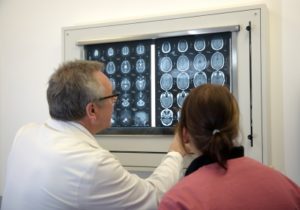 test(s) in determining an individual’s impairment. Although general physicians are skilled doctors and deserve all the accolades available, Social Security Disability applicants must seek, in addition to the opinions of a general physician, the opinions/diagnoses of specialists when making application for disability. These specialized opinions are critical in order for an applicant to be awarded disability. Let’s quickly take the above example of someone suffering from debilitating migraine headaches. In their case, it would be wise to seek the opinion of a headache specialist or neurologist while pursuing their claim. On my
  One of the least discussed but perhaps most frustrating aspects of the Social Security disability process has to do with the forms that Social Security requires when you apply or appeal. Over the years I have watched the forms evolve – and the trend is easy to detect: Social Security’s forms never get shorter. Instead they add questions which appear to ask for the same information again and again.
 I presented all three to our judge, and the judge decided to approve based on….(you’ll have to