Back in July, I posted a blog about how Facebook can potentially damage your Social Security Disability claim if information contained in your profile contradicts your disability claim and somehow gets in the wrong hands. But since there are many social media sites out there, I would like to elaborate on this topic so as to provide more comprehensive advice on the topic of whether social media is a friend or foe.
Never before in the history of technology has there been such an array of sources available for an individual to stay in contact with friends and family  far and near. One feature of social media sites like Twitter and Facebook that attracts millions of users per day is their short learning curve. The simplicity of these sites coupled with the fact that these mediums are free to the public attracts record amounts of new signees daily, and there appears to be no signs of a recession in sight. Although these type mediums are great tools in which to stay in contact or reunite with high school friends and distant family, a danger lurks within, which most users are either not aware of or simply take for granted. A mistake concerning privacy control on either of these social network sites could be the deciding factor on whether a disability applicant will receive benefits or not.
Facebook, Twitter and MySpace share the same premise for social contact; however, these social forums differ in their rules and regulations. Most of these sites are in real-time with postings denoting both a date and time for each post. For instance, the popular sites of Facebook and MySpace provide its users with the ability to post an indefinite supply of pictures and comments to a user’s network or followers, while its rival, Twitter is limited to micro blogs, those postings confined to only 140 characters. Creating messages under such a restricted limit often causes posts of only quick thoughts. Although most Twitter users voice frustration on being restricted to the mere 140 characters (spaces included), 140 characters unwisely utilized by “Jane Doe,” the social security applicant, could lead to irreparable harm and the demise of her disability application. To show how a simple post on Twitter can go from fun to disaster with the click of button (less than two seconds), let us take a brief look at a sample tweet. “Went on our family vacation, enjoyed synchronized swimming class at the hotel’s pool and walking around Disney World. Great time!” Although not a proper sentence, common to the Twitter world, this 116 character long tweet is the precursor for an impending disaster. Yes, as a post, it sufficiently allowed followers to learn and have a glimpse of her recent travel; in the social security world, however, it could be considered a costly mistake. Continue reading →
 trained, testimony from medical experts provide ALJ’s with a more complete and detailed understanding of your medical and/or mental situation prior to his/her issuance of an opinion in your matter.
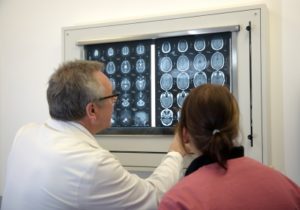 test(s) in determining an individual’s impairment. Although general physicians are skilled doctors and deserve all the accolades available, Social Security Disability applicants must seek, in addition to the opinions of a general physician, the opinions/diagnoses of specialists when making application for disability. These specialized opinions are critical in order for an applicant to be awarded disability. Let’s quickly take the above example of someone suffering from debilitating migraine headaches. In their case, it would be wise to seek the opinion of a headache specialist or neurologist while pursuing their claim. On my
  benefits?
 continuous period of not less than twelve months.”
 One of the least discussed but perhaps most frustrating aspects of the Social Security disability process has to do with the forms that Social Security requires when you apply or appeal. Over the years I have watched the forms evolve – and the trend is easy to detect: Social Security’s forms never get shorter. Instead they add questions which appear to ask for the same information again and again.
 I recently received a call from a colleague about a situation that is all too common given the delays associated with the Social Security disability adjudication process – the death of a claimant prior to a final adjudication.
 Over the past couple of years I have noticed an increase in the number of partially favorable decisions I am receiving. I think this is because my clients, especially low income clients, do not have access to regular medical care and judges are using consultative exam reports to move the alleged onset dates.
 SSI recipients and other low income Americans may be eligible for free cell phone or landline service under a program called